
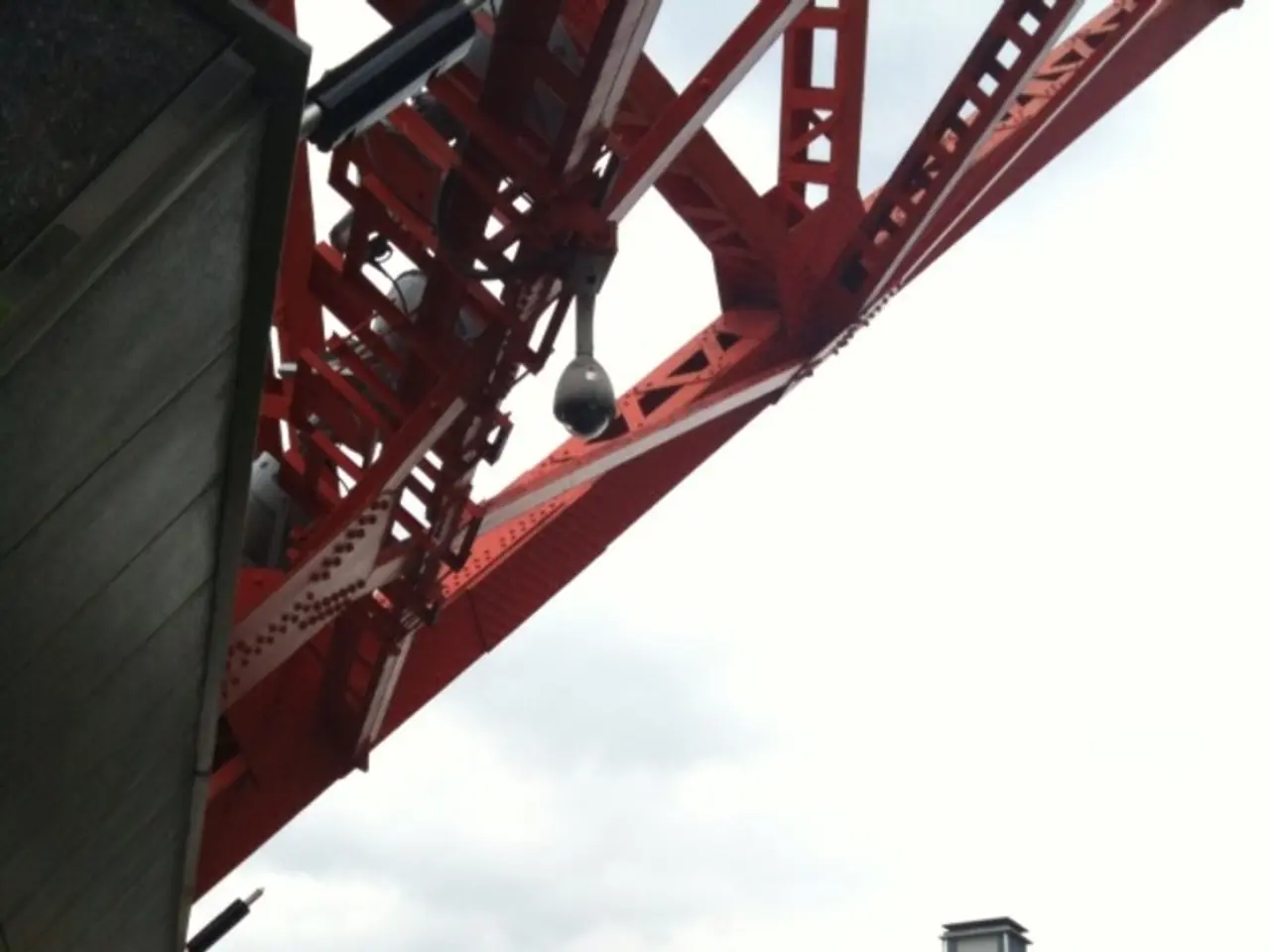
Construction commences on passenger boarding and deboarding facilities at Bucharest Henri Coanda Airport
Modernized Boarding Bridges Enhance Henri Coandă Airport in Bucharest
Henri Coandă Airport in Bucharest, Romania, is undergoing a significant expansion and modernization initiative to improve the passenger experience and operational efficiency. A key component of this transformation is the installation of modernized boarding and disembarkation bridges.
The bridges at Henri Coandă Airport are equipped with numerous advanced features. They boast flexible, enclosed jetways that provide a direct connection between the terminal and the aircraft, enabling safe, weather-protected, and efficient passenger movement. The bridges are also compatible with various types of aircraft and feature enhanced ergonomics for faster boarding and disembarkation.
One of the standout features of these bridges is their self-leveling function, which allows for automatic height adjustment. This, combined with the hydraulic actuation of the vertical columns, results in low energy consumption. The bridges are also fitted with proximity control sensors, intelligent systems for measuring rotation angles, and aircraft contact sensors to ensure smooth and precise movement.
The bridges at Henri Coandă Airport can perform circular and radial movements simultaneously, reducing aircraft docking time. They are also movable on the airport platform and are equipped with motion and tilt control sensors for added safety and precision. After the project's completion, the airport will have a total of 15 bridges.
The Bucharest Airports National Company (CNAB) has initiated modernization and repair works on these passenger boarding and disembarkation bridges. CNAB is also considering implementing a remote control system for the bridges in the future. However, as of now, the bridges do not have remote control capabilities.
Similar systems have been installed by Thyssenkrupp Airport Solutions in airports such as Heathrow in London, Madrid Barajas, Toronto, Dubai, and Doha. Thyssenkrupp Airport Solutions is a company that has installed similar systems in various airports worldwide.
The modernization plan for Henri Coandă Airport emphasizes state-of-the-art terminal design with smart technologies, energy-efficient systems, and healthy building principles, which likely extend to boarding bridge infrastructure.
In the context of modern airport terminals, the benefits of such modernized bridges typically include improved passenger comfort and safety by eliminating exposure to weather, increased efficiency in boarding and turnaround times, and accessibility enhancements for passengers with reduced mobility.
Modern airports worldwide, especially in major hubs in Europe, North America, and Asia, employ advanced boarding bridge technology as a standard. Airports like London Heathrow, Frankfurt Airport, Amsterdam Schiphol, and Dubai International have extensive boarding bridge networks with cutting-edge features to enhance passenger experience and operational effectiveness.
For more information about the modernized boarding bridges at Henri Coandă Airport, please visit radu@our website. The photo source for the image is Bucharest Airports on Facebook.
[1] "Henri Coanda International Airport Expansion Plans and Modernization." Accessed May 16, 2023. https://www.airport-technology.com/projects/henri-coanda-international-airport-expansion/
[4] "Airport Boarding Bridges Market by Type, Function, and Region - Global Forecast to 2025." Accessed May 16, 2023. https://www.marketsandmarkets.com/Market-Reports/airport-boarding-bridges-market-18714889.html
- The modernization project at Henri Coandă Airport in Bucharest includes the installation of advanced boarding and disembarkation bridges, featuring self-leveling functions, intelligent systems, and energy-efficient designs, similar to those used in airports like Heathrow in London, Madrid Barajas, Toronto, Dubai, and Doha.
- By employing cutting-edge boarding bridge technology, Henri Coandă Airport aims to improve passenger comfort, ensure weather protection, enhance accessibility for passengers with reduced mobility, and streamline boarding and turnaround times, reflecting modern airport terminal trends in Europe, North America, and Asia.