
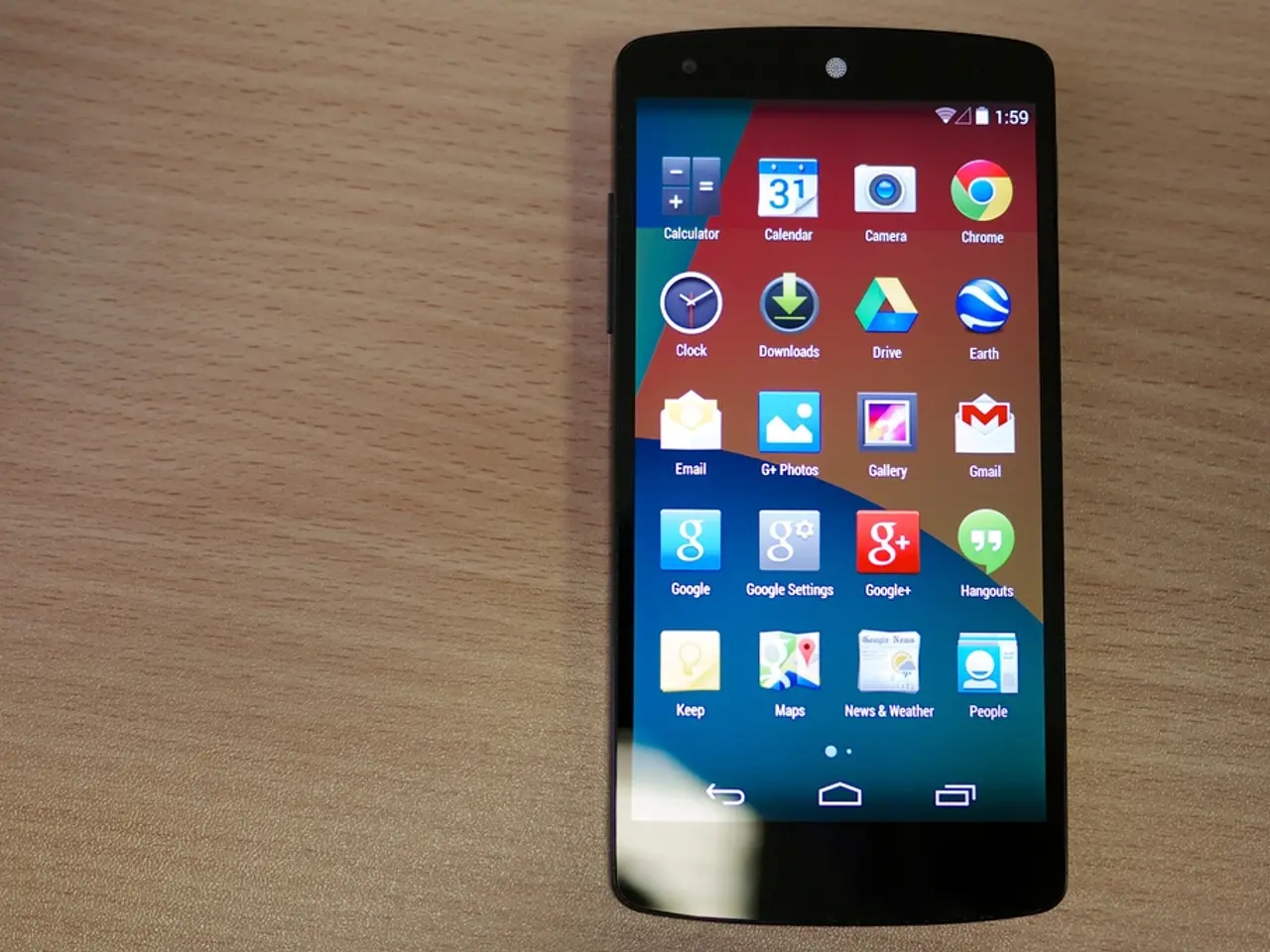
Mobile Applications' Security and Reliance: The Approaching Era of Blockchain Technology
In the ever-evolving world of technology, blockchain is making a significant impact on mobile application development. This groundbreaking technology, known for its association with cryptocurrencies, is primarily revolutionising mobile apps by enhancing security and fostering trust.
At its core, blockchain's decentralised, transparent, and cryptographically secured architecture is the key to its success. It offers robust protection for user data, deters fraud, and improves authentication, all while enabling secure, automated operations within apps.
One of the key ways blockchain boosts mobile app security and trust is through data protection via cryptographic hashing. Each transaction or data update is encrypted and immutably recorded in blocks, making it computationally infeasible for hackers to tamper with sensitive user data like payment or health records, thanks to encryption methods such as SHA-256.
Transparency and validation are also bolstered by blockchain. Every transaction is recorded across a distributed network, making unauthorised changes immediately detectable and rejected by consensus mechanisms. This audit trail significantly boosts confidence in data integrity beyond what centralised systems can provide.
Decentralisation is another significant advantage. Unlike traditional apps that rely on centralised cloud servers, blockchain distributes data and logic across nodes, removing single points of failure and strengthening backend security and availability.
Decentralised identity management is another key feature. Blockchain enables safer user authentication by replacing passwords with digital signatures or cryptographic keys stored locally on devices rather than centralised databases. This reduces phishing, credential theft, and hacking risks, especially for sensitive apps like digital wallets, legal platforms, or healthcare services.
Smart contracts, self-executing, tamper-proof digital agreements encoded on the blockchain, further enhance security by eliminating third-party vulnerabilities, ensuring transparency, and reducing errors or fraud in app operations.
The applications of blockchain in mobile app development span various domains, including finance and payments, healthcare, digital identity, reward and loyalty programs, supply chain and logistics, gaming, and personalisation. For instance, MyClinic.com uses blockchain to allow patients to organise and securely share their health records with doctors, while Axie Infinity and The Sandbox, built on blockchain, allow users to generate and exchange digital assets, with owners receiving actual ownership rights.
Enterprises are increasingly adopting blockchain in these domains for immutable audit trails, fraud resistance, and trust without depending on centralised intermediaries. The future of mobile applications looks promising with blockchain, particularly in social media, travel, learning, art, music, real estate, gaming, and decentralised finance.
In summary, blockchain's combination of encryption, decentralisation, consensus validation, and programmable contracts directly addresses critical mobile app security challenges while unlocking new functional possibilities through tokenisation and automation. This makes it a powerful tool for enhancing security, transparency, and trust in modern mobile applications.
Sources: [1] https://www.forbes.com/sites/bernardmarr/2018/09/24/why-blockchain-is-the-future-of-mobile-app-development/?sh=63c9e9f271a3 [2] https://www.ibm.com/blockchain/blockchain-for-mobile [3] https://medium.com/coinmonks/blockchain-for-mobile-applications-a-comprehensive-guide-e887d926c16f [4] https://www.oracle.com/industries/finance/blockchain-financial-services.html [5] https://www.ibm.com/blockchain/smart-contracts
- The encryption methods such as SHA-256 utilized in blockchain technology offer robust protection for sensitive user data, making it challenging for hackers to tamper with payment or health records within mobile apps.
- Blockchain's decentralized architecture and digital identity management system reduce phishing, credential theft, and hacking risks, providing enhanced security for sensitive apps like digital wallets, legal platforms, or healthcare services.
- In the realm of gaming, blockchain platforms like Axie Infinity and The Sandbox enable users to generate and exchange digital assets, granting actual ownership rights, which is a significant shift from traditional models of financing and ownership in the sports and lifestyle industries.