
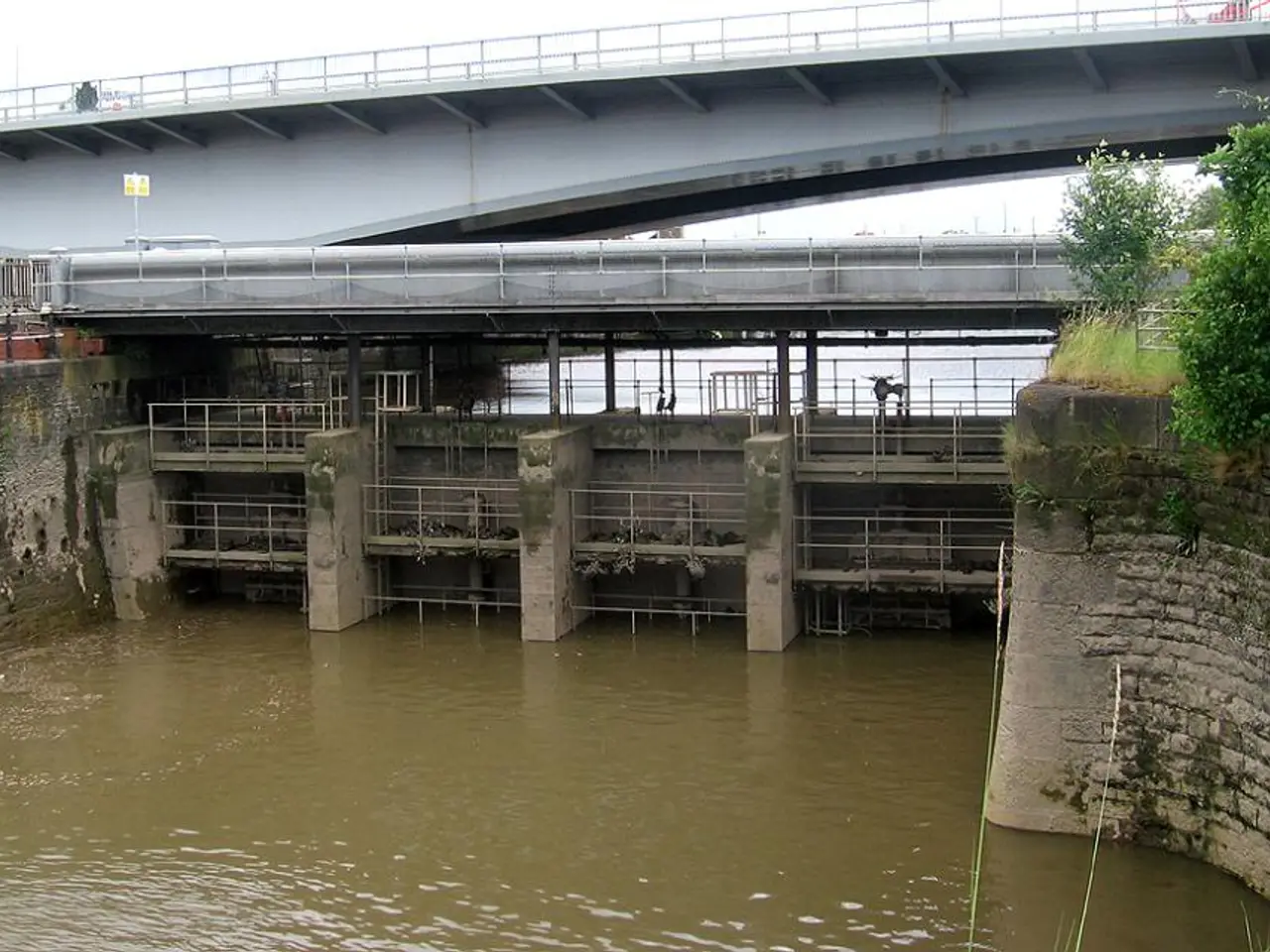
The Art of Flood Prevention: Constructing Barriers Against Nature's Fury - Sometimes Yielding Defeat
In the face of unpredictable, intense flood events that have historically caused extensive damage to communities, infrastructure, and property, the challenge of flood control has been a constant battle. From the 1860s through early 1900s, the Arroyo Seco area in the Los Angeles region experienced severe floods that damaged railroad bridges, homes, and public infrastructure, with increasing impacts as settlement expanded [1][2].
Historically, flood control strategies centered on channelizing rivers, preventing debris accumulation, and addressing both the width and speed of river flows to avoid damage to settlements and farmlands [1]. However, contemporary challenges have evolved with urban growth, climate change-induced extreme weather, and aging flood control infrastructure.
Dams, while critical in regulating flows and storing excess water, now face increased overtopping risk due to changing precipitation patterns, requiring updated safety and risk management strategies [4]. Flood protection for historic buildings also poses challenges, demanding tailored adaptation strategies such as elevating electrical systems, installing flood barriers, and implementing green infrastructure to manage stormwater and reduce flood risks [3].
Modern engineering marvels have significantly impacted flood management strategies. Dams and levees, for instance, regulate river flow, store excess water during floods, and protect urban and agricultural lands. However, their design must adapt to risks from extreme events and potential catastrophic failures [4]. Wetlands, acting as natural sponges, absorb overflow water, reduce flood peaks, and improve water quality. They are increasingly integrated into flood management for their ecological and hydrological benefits, complementing grey infrastructure [3].
Urban planning plays a crucial role in flood risk management. Flood risk-aware urban planning involves designing parks, recreational areas, and transportation routes to accommodate flood risks, such as the planned Arroyo Seco Park that considered flood impacts while combining recreational and transport uses [2]. Incorporating permeable pavements and green spaces helps manage stormwater runoff, mitigating urban flooding [3].
Community involvement is another essential aspect of flood management. Engaging local populations and experts in flood risk assessment and preservation efforts strengthens adaptation outcomes. Collaboration among preservation specialists, engineers, and communities is vital to protect cultural heritage and improve resilience [3].
The future of flood control requires collaboration across disciplines, sectors, and borders, with a commitment to sustainability and equity. Community drills, early warning systems, and public awareness campaigns are essential components of a comprehensive flood management strategy. The costs of building and maintaining flood defenses are substantial, and governments must balance these expenses against other priorities. Cost-benefit analyses can guide decision-making, helping allocate resources efficiently [5].
The economic impact of floods can be devastating, making investment in flood control a necessity. Wetlands, often overlooked, play a crucial role in flood mitigation by absorbing excess water and providing habitats for diverse species. Urban development has led to the destruction of many wetlands, reducing their capacity to mitigate floods [6].
Ancient civilizations, such as the Egyptians and Mesopotamians, developed early flood control methods, including harnessing the Nile's floods and building irrigation systems. Effective urban planning can mitigate flood risks in cities by incorporating green spaces, permeable surfaces, and efficient drainage systems. Cities like Rotterdam and Singapore have become models in integrating flood management into urban planning [7].
Advancements in technology have revolutionized flood prediction and monitoring, enabling authorities to anticipate floods and respond proactively. A global response is needed to address the urgency of climate change, with nations working together to share knowledge and resources to combat the growing threat of floods [8]. Technology offers solutions to flood management, such as advanced forecasting tools and real-time monitoring systems, but the challenge lies in implementing these innovations quickly and effectively [9].
Local knowledge, when combined with scientific insights, can lead to more effective flood solutions. Climate change is intensifying the frequency and severity of floods due to rising sea levels, unpredictable weather patterns, and increased rainfall, straining existing flood control systems. Adaptive strategies that can respond to changing conditions are needed [10].
Behind every flood control strategy are stories of human triumph and tragedy, reminding us of the stakes involved and the need for continuous improvement. Ensuring that technological innovations are accessible and integrated into existing systems is crucial for maximizing their potential [11]. The future of flood control lies in a balanced approach that leverages engineering, ecological functions, and community engagement for sustainable flood risk reduction while preserving cultural and environmental values.
- As climate change drives extreme weather events, the need for advanced flood control strategies becomes increasingly necessary to manage unpredictable flood events and protect communities, infrastructure, and property.
- Scientific advancements in data-and-cloud-computing and artificial intelligence have revolutionized flood prediction and monitoring, enabling authorities to respond proactively to flood events.
- Sustainability and equity are vital considerations in the future of flood control, with community drills, early warning systems, and public awareness campaigns essential components of a comprehensive flood management strategy.
- The integration of green infrastructure, such as wetlands and green spaces, into urban planning has been shown to mitigate urban flooding and improve water quality, complementing more conventional flood control methods like dams and levees.
- Collaboration among preservation specialists, engineers, and communities is essential to protect cultural heritage and improve resilience, ensuring that flood management efforts are tailored to meet the unique needs of each community.
- By adopting adaptive strategies that respond to changing climate conditions, such as elevating electrical systems, installing flood barriers, and implementing green infrastructure to manage stormwater, we can better prepare for the future impacts of climate change on our ecosystems and biodiversity.