
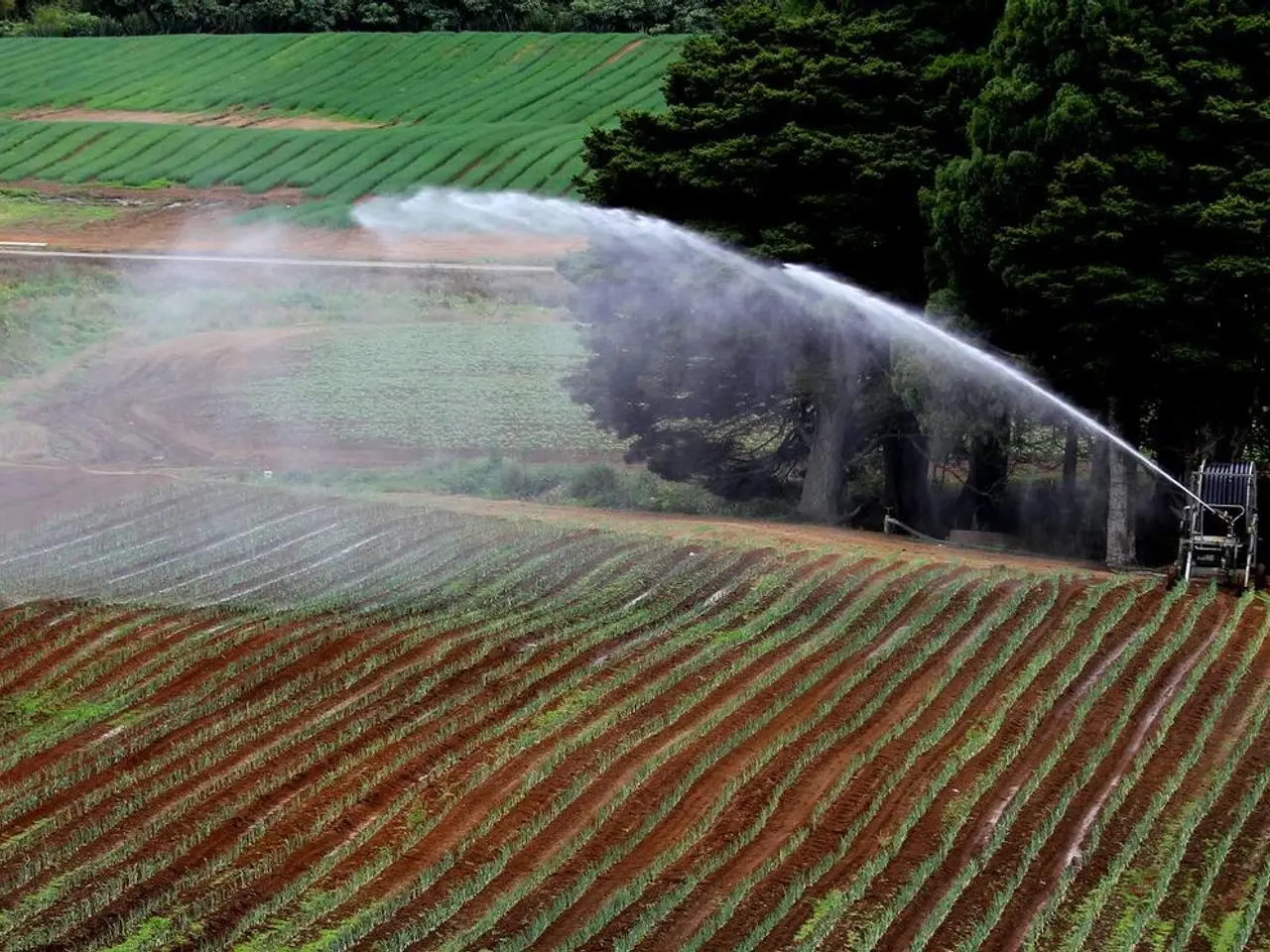
Transforming agricultural practices: Experts advocate for the implementation of precision agriculture
In a significant stride towards sustainable farming, a seminar was held in Dhaka on 16th July, organised by ACI Fertilizer and chaired by FH Ansarey, president of ACI Agribusiness Division. The event, titled "The Design of Precision Agriculture Framework at Three Different Scale Levels," brought together experts from various fields to discuss the benefits, challenges, and solutions for implementing precision agriculture in Bangladesh.
Precision agriculture is not just about boosting crop yields; it's about preserving soil and the environment for future generations. This was emphasised by Md Shahidul Islam, former Director General of BARI, who referred to precision agriculture or climate-smart farming as a 'game-changer.'
One of the key advantages of precision agriculture is its potential to promote environmentally friendly practices. Sensor technologies, controlled environment agriculture, and AI-driven soil monitoring can optimise water use, minimise waste, and manage soil health, reducing the need for excessive fertilizers and pesticides.
Moreover, precision agriculture allows for more accurate crop monitoring and management, leading to better crop yields. Machine learning algorithms can predict crop yields more accurately, enabling farmers to make informed decisions. Technologies like drones and satellite imaging provide real-time data, helping farmers optimise planting, irrigation, and harvesting processes.
However, the implementation of precision agriculture in Bangladesh also presents several challenges. Access to advanced technologies like drones, satellite imaging, and AI-driven systems can be limited for many farmers, especially small-scale ones. Financial support and government incentives are crucial for farmers to adopt these technologies.
Natural calamities and climate change also pose a significant threat to precision agriculture in Bangladesh, with flooding, drought, and salinity intrusion damaging equipment and reducing its effectiveness. Technical expertise and training are essential to ensure successful implementation, and market access and integration are crucial for the success of precision agriculture.
To address these challenges, Bangladesh needs to invest in infrastructure development, provide financial incentives, and implement training programs for farmers. Promoting sustainable practices and enhancing market access will be crucial for the successful implementation of precision agriculture in the country.
FH Ansarey, president of ACI Agribusiness division, emphasised that precision agriculture, driven by collaboration with scientists and partners, can transform farmers' lives. The keynote was delivered by Prof Ir Jetse Stoorvogel, head of environmental science at the Open University, Netherlands. M Jahiruddin, former dean of BAU, stressed the importance of ensuring the accuracy and effectiveness of technology.
Md Baktear Hossain, member director of Natural Resource Management (NRM), urged focus on reducing post-harvest losses and cutting production costs. IoT-based technologies in precision agriculture can help conserve foreign currency. The seminar focused on improving soil health alongside crop production.
In conclusion, precision agriculture offers a promising solution for Bangladesh's farming sector, with the potential to increase crop yields, reduce costs, and preserve the environment. However, to realise these benefits, it is essential to address the challenges and invest in infrastructure, financial support, training, and sustainable practices. With the right approach, precision agriculture can indeed be a game-changer for Bangladesh's agricultural sector.
Precision agriculture, a game-changer in environmental science, can help reduce the need for excessive fertilizers and pesticides by optimizing water use, minimizing waste, and managing soil health. Furthermore, the implementation of precision agriculture in the environmental field, such as climate-change and the environment, can contribute to sustainable practices and preserve the environment for future generations.




